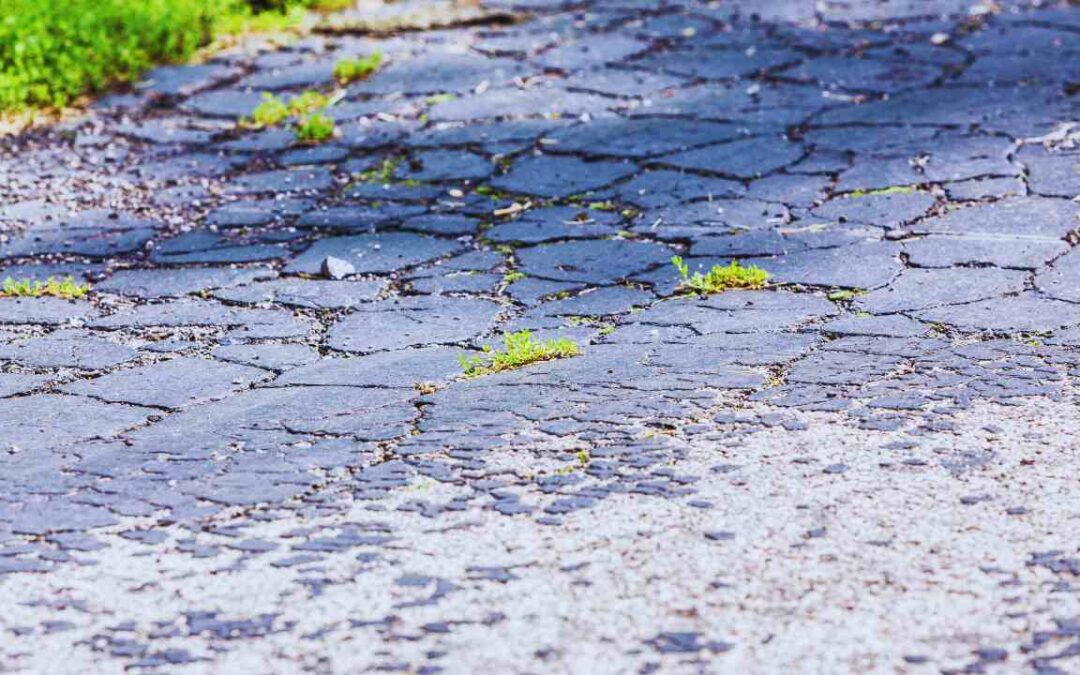
Some homeowners first spot the issue when a driveway starts dipping near the garage or a crack shows up after a dry stretch. Here’s the thing those early signs usually trace back to the soil underneath, not the concrete on top. Clay soil is a moisture-sensitive, highly expansive soil that swells when wet and shrinks hard when dry. St. Louis has a lot of it, especially across St. Louis County and the Metro East. When that soil moves, your driveway moves with it.
What that means for your driveway is simple. The slab can be thick, reinforced, and well-poured, but it’s still riding on clay that never stays still. You see sinking corners, separation from the garage, winter heaving, and cracks that keep spreading after every rain cycle. Local freeze–thaw swings only make that movement stronger. Homeowners think the concrete failed, but the soil was the real problem from day one. This article explains how clay soil behaves, why it shifts so aggressively in this region, and how that movement shows up in your driveway. You’ll also see what actually stops the damage, from proper base prep to smarter drainage to choosing materials that handle clay better.
Why Clay Soil in St. Louis Damages Driveways So Easily
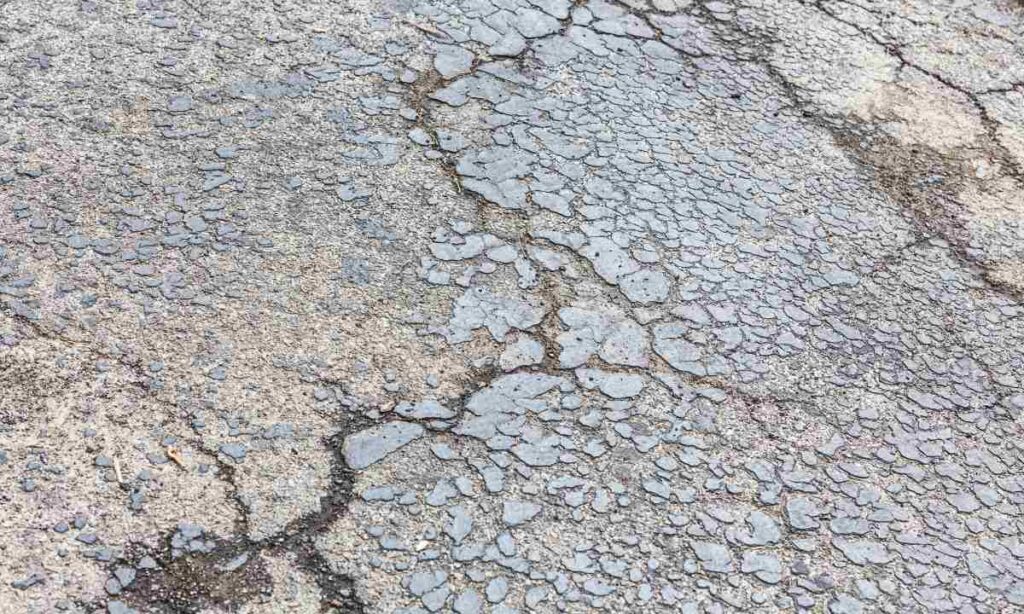
Before getting into numbers or soil terms, it helps to picture what’s really happening under a driveway in St. Louis. The ground may look solid from the surface, but clay behaves more like a sponge that never stops changing shape. When it gets wet, it swells. When it dries out, it shrinks and pulls away from anything built on top. That constant movement is what leaves so many homeowners wondering why their driveway suddenly dips, cracks, or pushes upward after a wet season.
Expansive clay soil is soil with minerals that swell dramatically when they absorb water. It grows and shrinks more than most soils, and that movement puts stress on anything sitting above it. St. Louis has a lot of this soil type, especially in places like Chesterfield, Webster Groves, Florissant, Wildwood, and much of South County.
Here’s what makes it so unstable:
-
High shrink–swell capacity.
This is the real culprit. When clay absorbs water, it expands. When it dries out, it contracts. That constant cycle lifts and drops the driveway slab over and over, which eventually leads to cracks and uneven settling. -
High plasticity index.
Clay soil can hold a large amount of water compared to other soils. The more water it holds, the more it expands. This is why after heavy rain, some driveways suddenly look like they’ve shifted overnight. -
Hydrostatic pressure pushing upward.
When saturated clay swells, it doesn’t just expand sideways. It pushes upward. That upward pressure can cause sections of concrete to heave or tilt, especially near garage entries or low spots where water lingers. -
Repeated dry–wet cycles.
St. Louis swings between humid summers, heavy fall rains, and freeze–thaw winters. Clay reacts to every shift. When you add vehicle load to a slab sitting on constantly moving soil, failure becomes a matter of time, not chance.
If you’ve ever seen a driveway suddenly lift after a strong storm or noticed a gap form under the slab during a dry spell, that’s the soil moving in real time. This is why properly built bases, good drainage, and the right installation method are essential in this region. Without them, the soil will eventually win.
How Freeze Thaw Cycles Multiply Clay Soil Problems
Here’s what happens. Moisture seeps into the tiniest cracks in your concrete driveway. Then temperatures dip below freezing often overnight and that water turns to ice. As it freezes, it expands. That expansion applies upward pressure on the concrete slab, pushing it slightly out of place. Now repeat that process over and over again.
According to NOAA, St. Louis averages over 100 freeze thaw cycles per year. That’s more than places further north with stable snow cover. The frequent swing between freezing nights and thawed afternoons is brutal on any hard surface but when combined with expansive clay underneath, it’s a recipe for disaster.
Every time the clay swells and the ice pushes, small movements occur. Over time, these movements cause:
-
Lifting slabs that create uneven trip hazards
-
Cracks that widen and let in even more moisture
-
Sinking edges where water runoff wears away support
-
Joint failure from stress and misalignment
What starts as a hairline crack becomes a structural problem by spring.
Why St. Louis Gets So Much Driveway Damage (Micro-Local Factors)
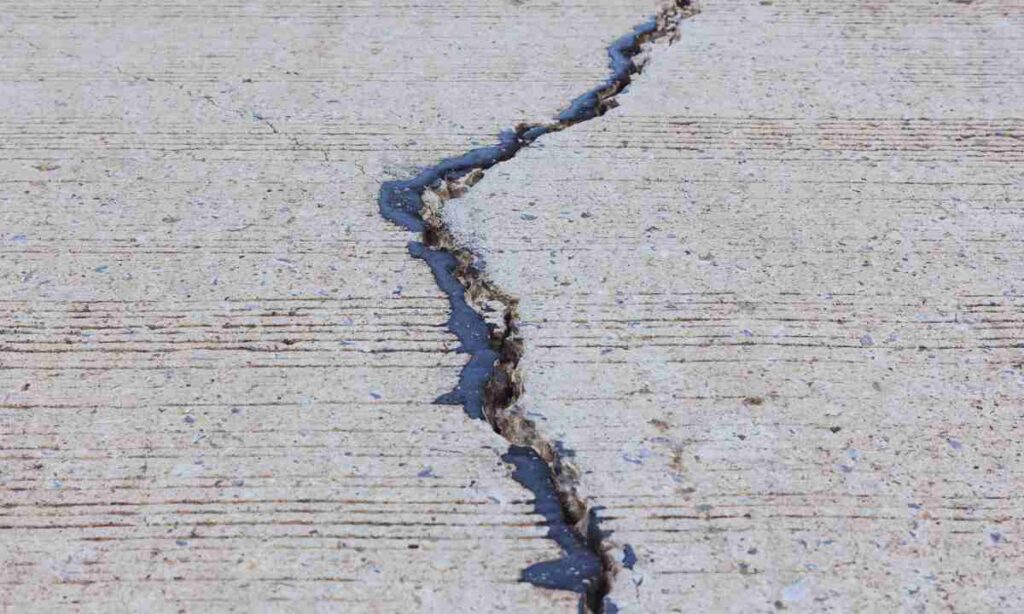
Not every suburb experiences these issues the same way. The specific conditions under each neighborhood vary and so do the results. Here’s how micro-local factors shape the damage you’re seeing:
-
South City & Dogtown: These older areas sit on dense, unrelieved clay and often have poor drainage infrastructure, especially near alleyways. Driveways here are prone to heaving and corner cracks.
-
Kirkwood & Maplewood: Known for their heavy tree canopy, these lots retain shade and moisture. That means slower drying times and persistent dampness under the slab, which worsens both freeze–thaw and clay expansion effects.
-
O’Fallon & St. Peters: Rapid growth and development have led to new builds sitting on compacted fill clay. These engineered soils often settle unpredictably, leading to premature slab sinking and joint separation.
-
West County (Ballwin, Ellisville, Chesterfield): Steep slopes and higher elevation bring serious runoff issues. Rain and melting snow rush down driveways, carrying fine soil particles away and leaving the base unstable.
Bottom line: it’s not just “clay soil”—it’s where you are in the St. Louis region and how that specific terrain behaves under pressure.
Signs Your Driveway Is Failing Because of Clay Soil
What Homeowners Notice First
Most homeowners don’t realize clay is the problem right away. What they notice is the symptom, not the cause. And those symptoms tend to sound a lot like this:
-
“My driveway keeps sinking near the garage.”
-
“The slab pops up every winter and drops in spring.”
-
“I’ve patched it three times — it still comes back.”
-
“The new driveway only lasted one year before cracking.”
These aren’t rare complaints. They’re everywhere on local forums and DIY threads because clay soil doesn’t just go away with surface repairs. The soil underneath is moving, swelling, shrinking, and messing with your slab year-round. What that means for your driveway is this: until you deal with the unstable clay under the surface, you’ll keep fighting the same battle. Repairs won’t hold. Patching cracks won’t stop the movement. The same issues will keep showing up season after season.
Visual Red Flags Every STL Homeowner Should Check For
You don’t need a contractor to spot most early stage clay related damage. You just need to know what to look for and catch it before it turns into a full replacement job.
Here’s what to check:
-
Sinking right where the driveway meets the garage
This is one of the most common spots to fail because it carries both load stress and collects moisture runoff. -
Driveway pulling away from the foundation
If you see a gap growing between the slab and your home’s footing, that’s a sign of uneven soil movement below. -
Cracks that widen during wet seasons and shrink in dry months
Seasonal shifts like these are a dead giveaway that your base is made of expansive clay. -
Puddling water in the same low spots
Water pooling over and over means the base underneath has dropped, creating a basin that gets worse every time it rains. -
Raised ridges in winter from frost heave
These are caused by a combination of freezing moisture and clay expansion and they often signal deeper instability.
If you’re seeing two or more of these, it’s time to stop patching and start planning.
Moisture Control: The Key to Stopping Clay Soil Damage
Homeowners often focus on which driveway material lasts longer concrete, asphalt, pavers. But none of that matters if you’re sitting on unstable, waterlogged clay.
Here’s why water is the real issue:
-
Clay expands by 10–15% when saturated. That’s not a small shift that’s enough to lift slabs, crack corners, and buckle edges.
-
St. Louis spring and fall rains hit fast and hard. One week of storms is all it takes to oversaturate the soil.
-
If your yard slopes toward the driveway, the water has nowhere else to go. That’s when the damage accelerates not from wear and tear, but from pressure building under the slab.
A fancy concrete mix won’t stop that movement. A thick slab won’t either. Without proper drainage and grading, your driveway’s fighting a losing battle against the ground itself.
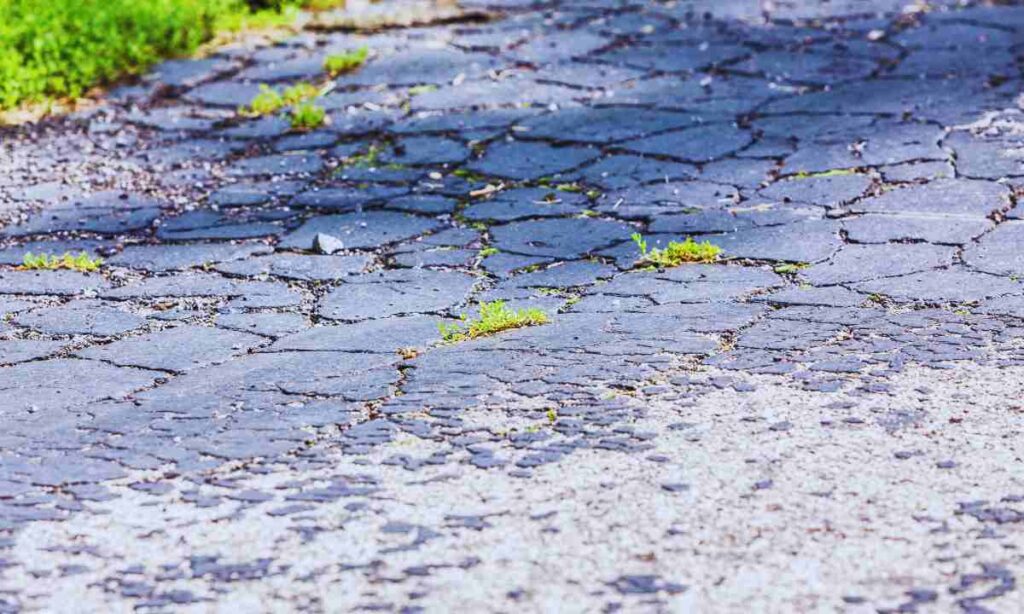
How Gutters and Downspouts Cause 70% of Driveway Issues
You’ve probably never thought about your gutters when looking at driveway cracks but you should. Most of the slab problems we see start at the edge. Right where downspouts are dumping water.
Here’s what happens:
-
Water flows off the roof and drops straight at the slab.
-
The soil softens, especially if it’s already clay-rich.
-
The edge of the driveway sinks or shifts.
Over time, this leads to corner cracking, slope changes, and pulling away from the house. And it’s not just one house this happens constantly across neighborhoods like Brentwood, South City, and Overland where older homes weren’t built with long drainage extensions.
Fixes are simple but effective:
-
Run downspouts at least 6 feet away from the slab.
-
Install underground drainage if water still collects.
-
Add catch basins or French drains where runoff pools near the driveway.
Think of your gutter system like a steering wheel if you’re pointing water the wrong way, everything downstream pays for it.
Soil Moisture Cycles: Why Cracking Gets Worse Every Summer & Fall
Here’s the pattern we see every year: summer dries everything out. Fall rains soak it again. Clay doesn’t like that.
-
In dry months, clay shrinks and pulls away from your slab.
That leaves voids underneath hollow gaps where the slab no longer has full support. -
When the rains return, clay swells back up but not evenly.
Some areas lift, others don’t. That’s how you end up with uneven sections, stress cracks, and tilted surfaces.
It’s like building on top of a sponge that shrinks and swells at its own pace. You can’t stop the seasons, but you can stop uncontrolled moisture swings. That’s what we’ll get into next.
Which Driveway Materials Perform Best Over Clay Soil?
Concrete Slabs vs Pavers: Which Holds Up Better?
Here’s the thing about driveways on clay: it’s not about what looks good on top it’s about what survives underneath.
- Concrete is rigid. That’s its biggest strength and its biggest weakness. Once the clay underneath swells or sinks which it will that slab starts to crack. You’ll usually see it first at the joints or along the garage edge.
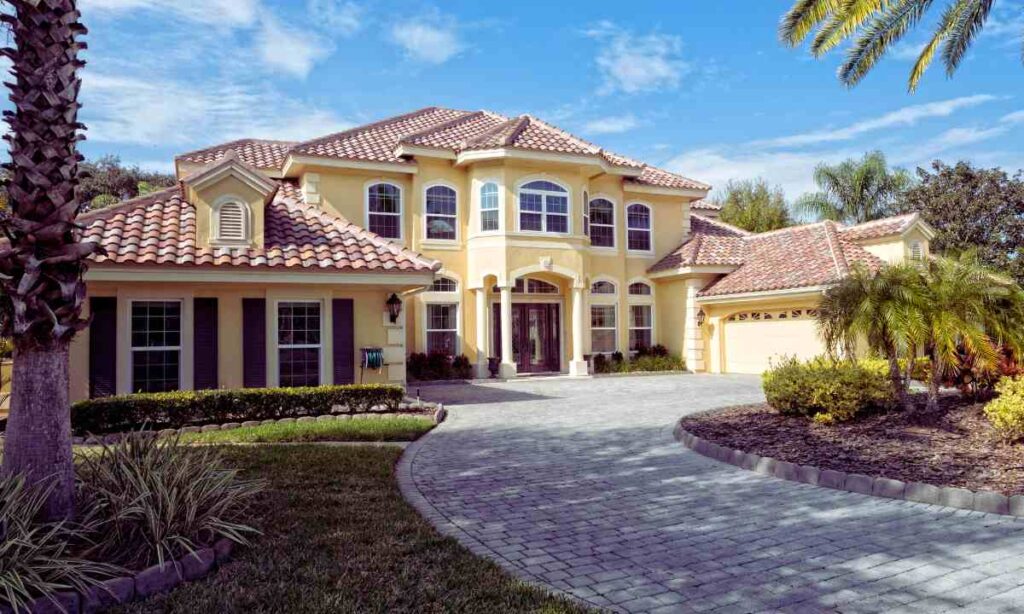
- Pavers, on the other hand, can move with the soil. Each one floats slightly on a compacted base, so when the ground shifts, the surface flexes without breaking apart. And if something does settle unevenly, you can lift a few, fix the base, and reset them without replacing the whole driveway.
There is some upkeep joint sand needs topping up, and occasional sealing helps. But compared to patching concrete every year, it’s a trade most homeowners in Ballwin or South County are willing to make.
Asphalt on Expansive Clay: Is It Ever a Good Idea?
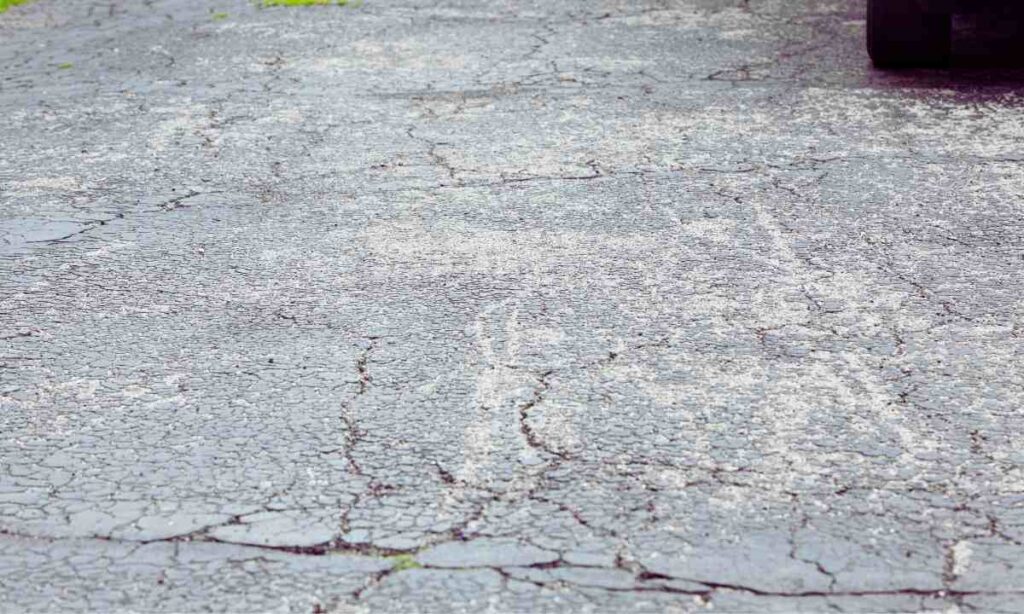
Short answer: not really. Asphalt softens when it’s hot. In July or August, that can turn your driveway into a sponge especially if there’s clay underneath that’s already saturated. Add the weight of a truck or SUV, and it’s not long before you’ve got dips, ruts, or edge crumbling. It’s also more patchwork-prone. Once asphalt starts breaking down, the fixes are temporary. On clay soil, that cycle happens fast.
Best Base Construction for Clay Soil Stability
No matter what material you pick, the base makes or breaks the driveway. Here’s what we build for stability in areas like Chesterfield and Florissant:
-
8–12 inches of compacted gravel, layered and tamped down in lifts
-
Geotextile fabric to separate the soil from the base and prevent mixing
-
Drainage channels to move water away from the slab or pavers
-
Stabilized bedding layer (especially under pavers) to reduce shifting
If you’re comparing options, our paver installation services in St. Louis page explains base prep, compaction, and drainage setup in more detail.
How to Fix a Driveway Already Damaged by Clay Soil
Can You Mud jack a Sinking Driveway in St. Louis?
Yes — but only as a short-term fix. Mud jacking (or slab jacking) involves pumping material under the slab to lift it back into place. It works if the surface is mostly intact and you just need to bring it level. But here’s the catch: if water is still getting underneath, it’ll sink again.
We’ve seen this happen over and over in places like Florissant and Kirkwood the slab lifts in spring, drops in fall, and the cracks keep coming back. If you’re not addressing the underlying moisture issue, you’re just buying time.
When Driveway Replacement Is the Only Real Solution
Sometimes, the damage goes too deep for patching or lifting. Here’s how you know:
-
Heaving so bad that slabs are uneven by more than an inch
-
Large, structural cracks that widen and shift seasonally
-
Complete base failure, where the gravel underneath is washed out or compacted unevenly
In those cases, full replacement with a new drainage-focused base is the only smart path forward. Otherwise, you’re throwing good money at a bad foundation — literally.
Drainage Fixes That Actually Work (Not Band-Aids)
If water is driving the problem, then drainage needs to be part of the fix — not an afterthought.
Here’s what actually works in St. Louis clay zones:
-
French drains along the driveway edges to redirect water
-
Gravel trenches under downspouts or low spots
-
Catch basins to collect and move water off the slab
-
Swale adjustments to steer runoff downhill
-
Regrading the surrounding soil so water flows away, not toward
If drainage is the root cause, our paver driveway installation services walks through long-term base solutions built for clay-heavy neighborhoods.
How Long Driveway Repairs Last on Clay Soil (Realistic Expectations)
Lifespan by Fix Type
Homeowners in St. Louis often ask, “How long will this actually last?” The honest answer: it depends on how well the soil and water issues are handled not just what material you choose.
Breakdown of realistic timelines:
-
Crack patching: Expect 1–3 years before the same cracks reappear, especially in areas with shifting clay like South County or Florissant.
-
Mud jacking: You might get 5–8 years if soil moisture stays consistent. But that rarely happens here unless drainage is addressed too.
-
Concrete replacement: A new slab may hold for 10–20 years, but only with a thick gravel base and moisture control. Without that, cracking can start again in 5–7.
-
Paver system with proper drainage: This is the long-game solution. With a stabilized base, geotextile, and smart drainage, pavers can last 20–40 years, even on expansive clay.
Why do pavers perform better? Because they flex slightly with soil movement. Instead of cracking, they shift and reset. And if one does get damaged, you just replace that piece not the whole driveway.
The key is what’s underneath: 8–12 inches of compacted gravel, drainage layers, and moisture control make the difference. Let’s finish with when it makes sense to bring in a pro and what they should really be evaluating before giving you a bid.
Should You Hire a Pro or DIY?
When Homeowners Can DIY
Not every driveway issue demands a crew and a bobcat. There are a few jobs most homeowners around St. Louis can handle themselves, especially if the damage is surface-level:
-
Crack filling: Good for hairline cracks or joints that need resealing.
-
Small leveling adjustments: A few bags of gravel under a sunken corner can buy you time.
-
Downspout extensions: If water’s dumping at the slab edge, a simple extension can prevent bigger problems.
The trick is knowing when you’re just treating symptoms and when the structure underneath is failing.
When You Need a Contractor
-
Base failure: If your driveway is rocking, hollow-sounding, or feels spongey in spots, the base is likely gone.
-
Drainage issues: Water pooling near the slab, soggy edges, or runoff that slopes toward the house calls for regrading, swales, or a French drain — not a weekend fix.
-
Sinking near the garage: This one’s big. It usually points to poor soil compaction, inadequate base prep, or gutter runoff problems.
-
Winter frost heave damage: If your slab lifts every winter and drops come spring, that’s clay soil and freeze-thaw working together. You’ll need a proper sub-base and moisture barrier to stop it long term.
If you’re dealing with frost heave or seasonal sinking, installing pavers in St. Louis County or the Metro East with a flexible base might be the long-term fix that avoids repeated concrete repairs year after year.
FAQs About Clay Soil & Driveway Damage in Missouri
Why does my driveway sink every winter in Missouri?
Clay soil holds water like a sponge, then shrinks when it dries out. During winter, the freeze–thaw cycle pushes moisture upward and lifts the slab. When temperatures rise, the ground softens and drops again. That constant movement causes uneven sinking, especially near garage slabs. St. Louis sees over 100 of these freeze thaw swings per year.
Can clay soil lift a concrete driveway?
Yes — expansive clay can lift slabs several inches when saturated, especially in winter. The soil swells as it absorbs water and pushes upward, creating pressure from below. That force cracks concrete and causes noticeable heaving. It’s common in areas with thick clay layers like Florissant or Wildwood.
What’s the best driveway type for expansive clay?
Paver driveways usually perform best in clay-heavy regions. Unlike concrete or asphalt, pavers can flex and shift slightly with the soil instead of cracking. A properly built paver system with deep gravel base, fabric, and drainage holds up longer under shrink–swell pressure. It’s the most resilient option for movement-prone yards.
Will sealing my driveway help with clay soil issues?
Sealing helps slow water penetration into concrete, but it won’t solve underlying clay movement. It’s a short-term protection against surface moisture, not soil expansion. If water’s already getting under the slab or pooling at the edges, sealing won’t stop sinking or heaving. Fixing drainage and grading is more important.
How do I stabilize clay soil under a driveway?
Start with a deep gravel base at least 8–12 inches and geotextile fabric to prevent soil mixing. Add drainage channels or catch basins to move water away fast. For pavers, a stabilized bedding layer helps keep everything in place. Moisture control is key; no base will hold if the soil stays wet.
Protecting Your Driveway From St. Louis Clay Soil
Clay soil in St. Louis isn’t just annoying it’s one of the biggest reasons driveways crack, sink, or fall apart long before they should. Between the swelling during wet seasons and shrinking in heat, most driveways are under constant stress from the ground itself. The sooner you catch small signs like edge separation or water pooling, the easier and cheaper the fix. Letting it go too long often leads to full slab failure or base collapse. And if you’re already dealing with those issues, rebuilding with the right foundation and moisture control is key.
Paver driveways built over proper drainage systems hold up far better in these conditions. They’re flexible, repairable, and better suited to soil that just won’t sit still. If your driveway is sinking or showing early signs of heave, the team at Retaining Wall & Paving Solutions can walk the site, check the drainage, and recommend the right long-term fix for your soil conditions.