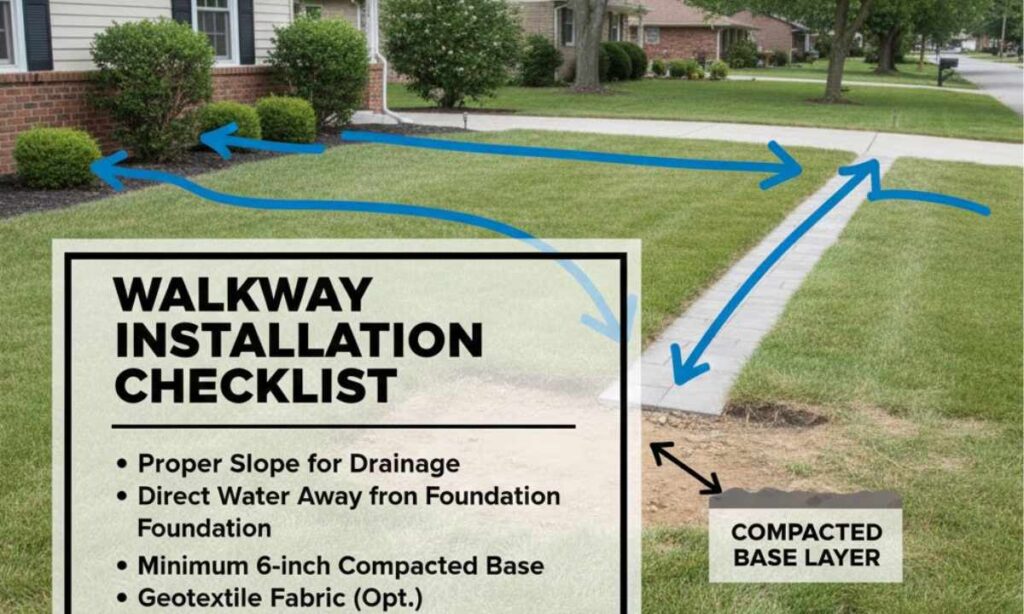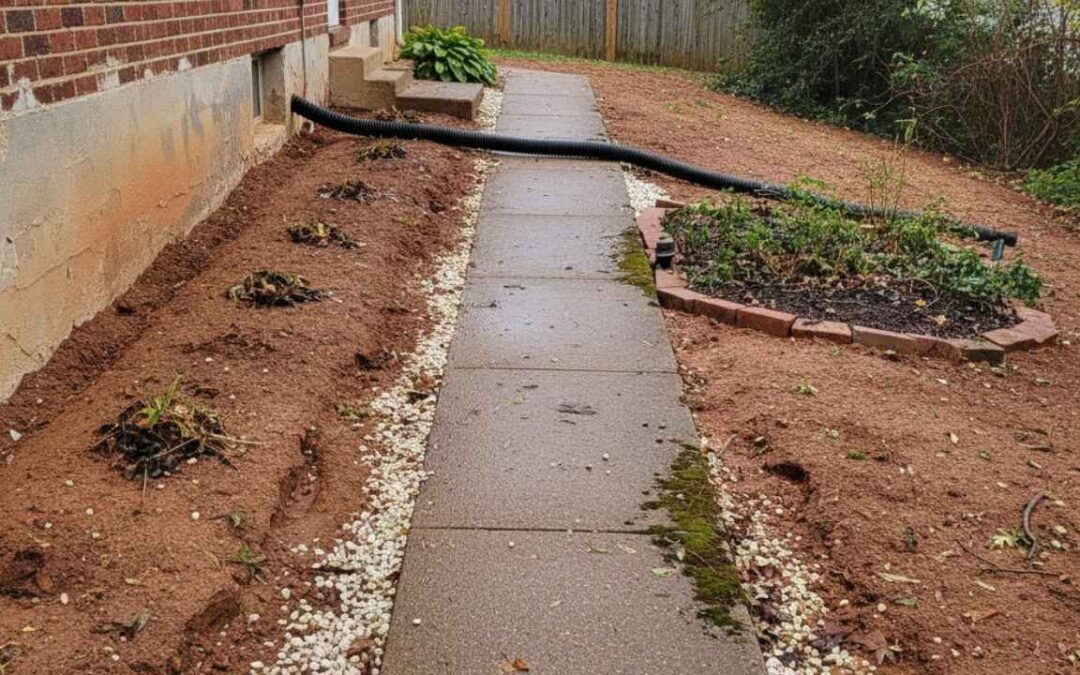
Walkway cost in St. Louis refers to the total price of building or replacing a walkway once material choice, yard conditions, soil behavior, drainage, and long-term performance are all accounted for. That number varies more here than many homeowners expect, and it’s not because contractors are guessing. It’s because St. Louis conditions force real tradeoffs that directly affect labor, base construction, and drainage work.
Two walkways with the same square footage can end up thousands of dollars apart. One might sit on relatively stable ground with clear runoff paths. Another might cross expansive clay soil, collect water from a downspout, or cut across a sloped yard where erosion is already happening. Those differences change how deep the base needs to be, how water has to be managed, and how much prep work is required before the surface ever goes in.
If you’re trying to understand why quotes don’t match or what actually drives cost here, the answer almost always starts below the surface.
What St. Louis Homeowners Actually Pay for Walkways
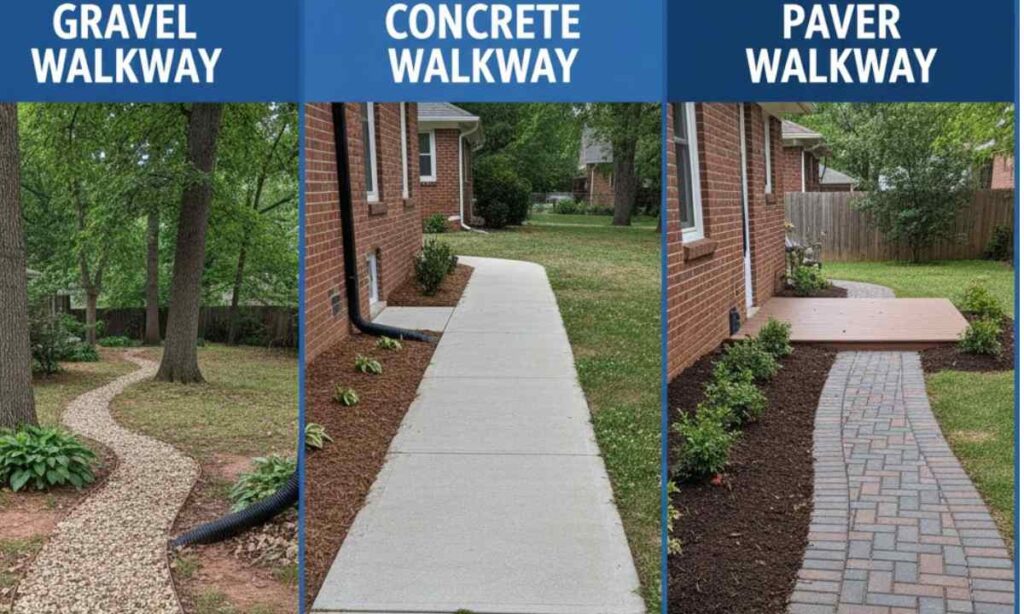
Most St. Louis walkway costs fall within predictable ranges, but the final price depends more on soil, drainage, and slope than the surface material. Homeowners are often surprised because two walkways of the same size can cost very different amounts once site conditions are factored in.
Typical installed price ranges seen locally:
-
Gravel walkways: Often the lowest upfront cost, commonly used for simple, flat areas with good drainage. Long-term costs increase when washout, migration, or edge loss require regular replenishment.
-
Concrete walkways: Mid-range pricing when installed over a properly prepared base. Costs rise when additional excavation, drainage correction, or slope adjustment is required.
-
Paver walkways: Higher upfront cost due to base depth, compaction, and edge restraint requirements, but longer service life when built correctly on clay soil.
The biggest reasons prices vary in St. Louis:
-
Clay soil behavior: Expansive clay requires deeper excavation and engineered base preparation.
-
Drainage conditions: Redirecting runoff from downspouts, driveways, or slopes adds labor and materials.
-
Slope and grading: Even small grade corrections increase excavation and base work.
When costs spike unexpectedly, it’s usually because buried issues are uncovered during excavation. Saturated soil, poorly compacted fill, or unmanaged runoff often force scope changes mid-project.
The practical takeaway is simple. Walkway pricing in St. Louis reflects how much work is required below the surface. When quotes differ sharply, the difference is almost always in base preparation, drainage handling, or grading strategy, not in the visible material.
Average Walkway Cost in St. Louis (By Square Foot)
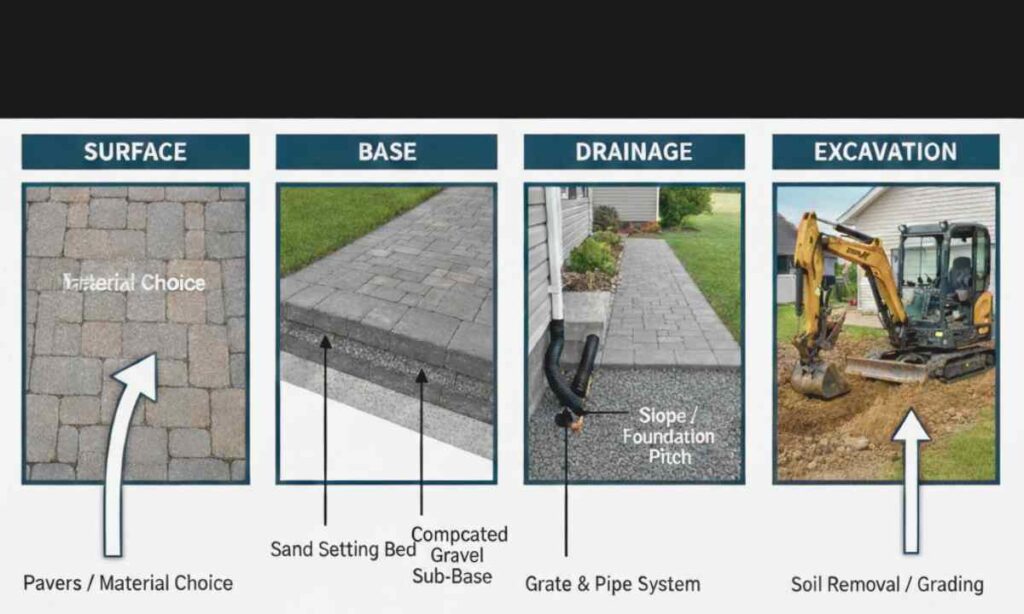
Most homeowners think in square-foot pricing first, and that’s reasonable. It’s the most common way contractors quote walkways. Just understand this up front: price per square foot is a baseline, not a final answer. In St. Louis, soil conditions, base construction, and drainage decisions often matter more than the surface material itself.
Typical Price Ranges per Square Foot in St. Louis
Yes, there are reliable local price ranges, but they need to be read correctly.
Based on aggregated contractor pricing data from regional cost databases such as Angi, HomeAdvisor, and ProMatcher, along with published rates from St. Louis hardscaping contractors, installed walkway costs commonly fall into these ranges:
-
Concrete walkways:
Plain poured concrete walkways are typically reported in the $8 to $15 per square foot installed range in the St. Louis area. Lower figures usually reflect basic finishes and minimal site prep, while higher figures account for reinforcement, thicker slabs, excavation, and proper base work. -
Concrete paver walkways:
Standard concrete paver walkways are commonly reported between $15 and $25 per square foot installed. This range reflects modular materials, a compacted aggregate base, and hand placement. Pricing increases when base depth, drainage detailing, or access constraints are involved. -
Gravel walkways:
Gravel paths are generally the least expensive upfront option, often reported below hard surface systems. However, pricing varies widely depending on edging, base preparation, and slope control, and long-term maintenance costs are higher.
These ranges represent typical professional installation, not DIY materials only, and they assume average site access and standard residential conditions.
Why Square Foot Pricing Is Only the Starting Point
Yes, square-foot pricing helps set expectations, but it does not account for the factors that drive real cost differences in St. Louis.
The biggest variables usually sit below the surface:
-
Base depth and construction
In St. Louis clay soil, industry best practices supported by Interlocking Concrete Pavement Institute guidance for Missouri call for a 4- to 6-inch compacted aggregate base for walkways to reduce movement and frost-related distress. Deeper bases increase material, labor, and compaction time, which directly affects price. -
Drainage management
Walkways that intercept runoff from downspouts, driveways, or sloped yards often require grading adjustments or defined discharge paths. Redirecting water adds labor and sometimes additional materials, even if the surface looks simple. -
Soil preparation
Expansive clay does not behave like sand or loam. Excavation, stabilization, and proper compaction matter. When soil prep is skipped or minimized, costs drop initially but failures become more likely. -
Access and site constraints
Tight side yards, fenced properties, elevation changes, or limited equipment access slow production and raise labor costs. These factors rarely show up in online price calculators but are common in older St. Louis neighborhoods.
What this means in practical terms is simple. Two walkways with the same square footage and material can land in very different price ranges once soil behavior, drainage, and access are accounted for. That’s why square-foot pricing should be treated as orientation, not a guarantee. Many of the cost variables discussed here are the same base and drainage principles used under driveways, where soil movement and water exposure are even more demanding.
What Actually Drives Walkway Cost in St. Louis Homes
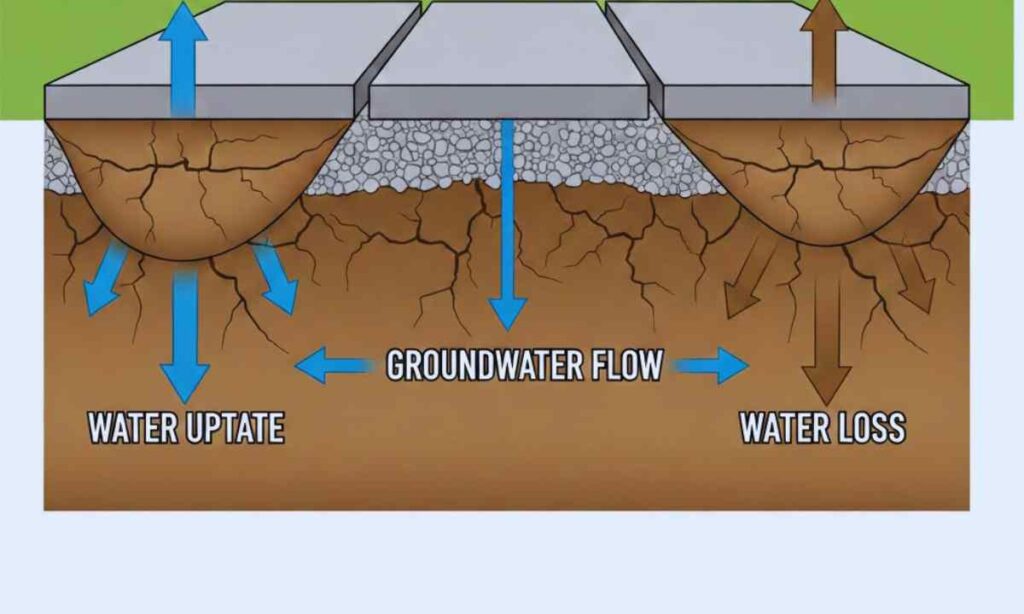
Two walkways can look similar on the surface and still come back with very different quotes. In St. Louis, those differences are rarely arbitrary. They come from what the ground, water, and layout require beneath the finished surface. This section explains where costs actually diverge and why those line items matter. This is why understanding how walkways are designed to handle local soil and drainage matters more than comparing surface materials alone.
Does Clay Soil Increase Walkway Costs in St. Louis?
Yes. Expansive clay soil directly increases base construction and labor costs.
St. Louis sits on expansive clay that swells when wet and contracts as it dries. That movement reduces load bearing capacity and makes shallow or lightly compacted bases unstable over time. To manage this, installers often need to excavate deeper, remove unsuitable material, and install a thicker engineered base designed to stay locked together through moisture changes.
This is one of the most common reasons two quotes differ by thousands, even when the surface material is the same. A walkway built to sit on native clay will almost always cost less up front and fail sooner.
Do Drainage Problems Add to Walkway Cost?
Yes. Drainage corrections are often a separate and necessary cost line item.
Water is the main trigger for walkway failure in this region. When runoff from downspouts, driveways, or slopes is allowed to saturate the base, settlement and erosion follow. Correcting this usually requires redirecting water away from the walkway through extensions, grading adjustments, or defined discharge paths.
These corrections are not upgrades. They are protective measures. When drainage work appears in a quote, it typically reflects an existing condition that would undermine the walkway if left unaddressed. This is why drainage costs often surprise homeowners and why skipping them usually leads to repeat repairs.
How Do Slope and Access Conditions Affect Walkway Pricing?
They increase excavation time, safety requirements, and layout complexity.
Sloped yards require more precise grading to prevent runoff from crossing or channeling along the walkway. Excavation becomes more labor intensive as pitch increases, especially where soil needs to be removed and replaced in lifts. Access also matters. Tight side yards, steps, or limited equipment access extend labor time even on small projects.
In these conditions, costs rise not because the walkway is larger, but because the margin for error is smaller. Preventing settlement and trip hazards on sloped ground requires additional prep that flat yards simply do not need.
Walkway Materials and Their True Cost Over Time
Material cost in St. Louis is not just about what you pay per square foot on install day. It’s about how each surface responds once clay soil, water, and freeze–thaw cycles start interacting with the base. Two walkways with similar square-foot pricing can age very differently depending on how forgiving the material is when conditions are less than perfect.
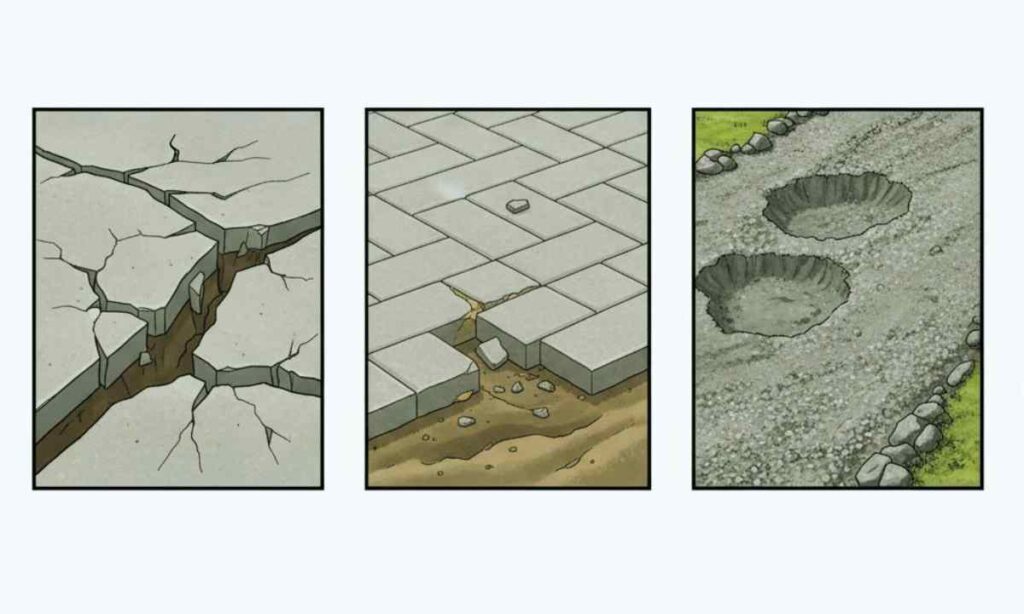
Concrete Walkway Costs in St. Louis
Yes, concrete typically sits at the lower end of the installed cost range, which is why it often shows up as the baseline option in quotes.
That lower per-square-foot price assumes a stable base and controlled moisture. Concrete itself does not absorb movement. When expansive clay below it swells or shrinks, the slab reflects that stress through cracking or lifting. In St. Louis, freeze–thaw cycles amplify this risk whenever water reaches the subgrade.
What matters for cost over time is not just the initial price, but the fact that concrete repairs usually address symptoms rather than underlying movement. Once a slab cracks due to base instability, correction often requires removal and replacement rather than adjustment.
Paver Walkway Costs in St. Louis
Yes, pavers usually price higher per square foot upfront, but that price reflects a different structural approach.
Instead of relying on a single rigid surface, pavers distribute load across individual units set on a compacted base. That allows minor soil movement without visible damage. In clay-heavy St. Louis soil, this flexibility often reduces long-term repair frequency.
From a cost perspective, pavers shift expense from replacement to adjustment. If settlement occurs, sections can be lifted and reset after base correction. That keeps future costs more targeted and less disruptive than slab replacement. This long-term behavior mirrors what we see in similar material systems used for patios in St. Louis yards, where base design matters more than the surface finish.
Gravel Walkway Costs and Maintenance Tradeoffs
Yes, gravel has the lowest installation cost per square foot, but it also has the least predictable long-term cost.
Gravel does not fail structurally, but it migrates. In St. Louis, water moving through gravel often saturates the clay beneath, leading to rutting, washouts, and loss of edge definition. Over time, the cost shows up as repeated regrading, material replacement, and edging repairs rather than a single repair event.
For homeowners comparing quotes, gravel often looks inexpensive on paper and expensive in upkeep.
How These Materials Compare When You Line Them Up by Cost
When homeowners compare square-foot prices alone, concrete usually looks cheapest, pavers look expensive, and gravel looks like a shortcut. When lifespan and repair behavior are factored in, the picture changes.
Concrete concentrates risk into cracking and replacement. Pavers distribute risk into smaller, correctable adjustments. Gravel spreads cost over time through maintenance rather than structural failure.
This is why two quotes with similar total prices can represent very different long-term commitments. The material choice determines not just how much you pay now, but how often you’ll be revisiting the same problem later.
Hidden and Often Overlooked Walkway Costs
This is where many St. Louis homeowners get caught off guard. Walkway quotes often focus on surface installation, but several real costs sit just outside the base price. These aren’t upsells. They’re conditions that show up once work begins or after the first failure if they’re ignored.
Removal and Disposal of Existing Walkways
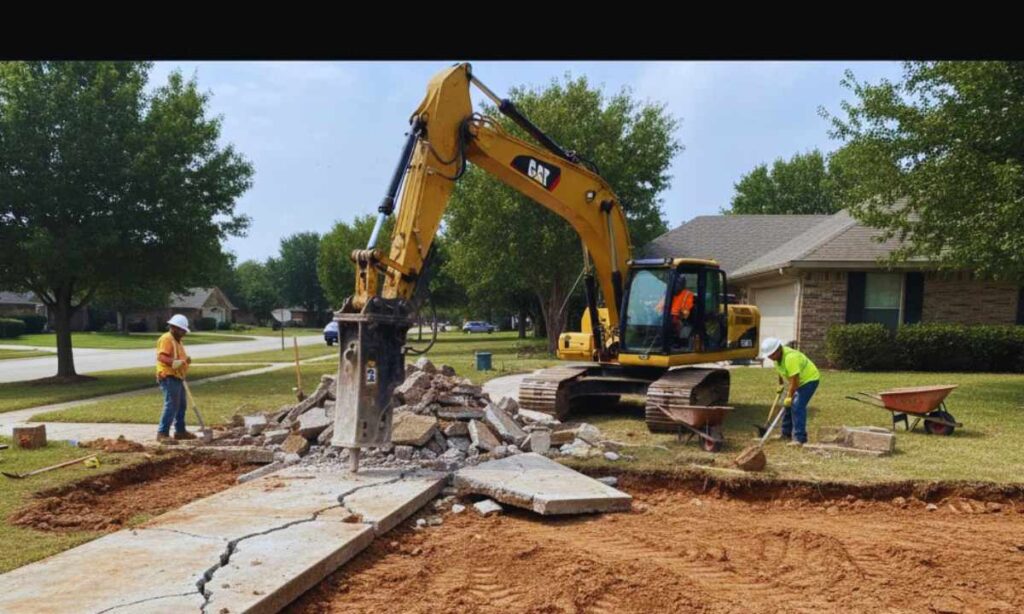
Yes, removing an old walkway can add meaningful cost before new work even starts. Concrete thickness, reinforcement, and access all affect labor and disposal time.
Older St. Louis walkways are often thicker than expected or reinforced with wire mesh, which slows demolition. Tight side yards, steps near foundations, or limited equipment access can also increase labor hours. Haul-off fees vary based on material volume and local disposal requirements.
When demolition is underestimated, the difference usually shows up as a change order, not a lower install price.
Drainage Fixes Not Included in Basic Quotes
Yes, drainage corrections are frequently excluded from initial walkway pricing. That’s because surface installation and water management are often treated as separate scopes.
A walkway can be installed correctly on top and still fail if water continues to run underneath it. Surface drainage handles where water goes after rain. Subsurface conditions determine what happens when water reaches the base. If runoff paths, downspout discharge, or pooling areas aren’t addressed, the long-term risk stays in place.
This is one of the most common reasons a new walkway develops the same problems as the old one.
Permits, Repairs, and Site Prep Variations
Yes, site-specific requirements can change costs even when walkways look similar on paper. Local permit rules, grading adjustments, and prep work vary by property.
In some St. Louis areas, permits or inspections apply based on scope or proximity to structures. Uneven grades, soil inconsistencies, or prior repairs can also increase prep time. These factors don’t reflect poor planning. They reflect real differences between properties.
When these items aren’t discussed upfront, they tend to appear later as unexpected additions rather than part of a clear, complete quote.
Repair vs Replacement: Which Is More Cost-Effective in St. Louis?
This is usually the hardest call for homeowners. The walkway is damaged, but not destroyed. Repair feels cheaper. Replacement feels drastic. In St. Louis, the right choice comes down to whether the structure underneath is still doing its job.
When Repair Makes Financial Sense
Yes, repair can be the more cost-effective option when the problem is truly limited and stable.
Repair tends to work when damage is isolated to a small area and hasn’t changed much over time. That usually means the base is still intact and water is not actively undermining the walkway. Examples include a single settled paver, a minor edge shift, or a small section affected by one-off impact rather than ongoing soil movement.
The key test is consistency. If the issue looks the same season after season and doesn’t worsen after heavy rain or winter freeze–thaw cycles, repair can extend the life of the walkway without throwing good money after bad.
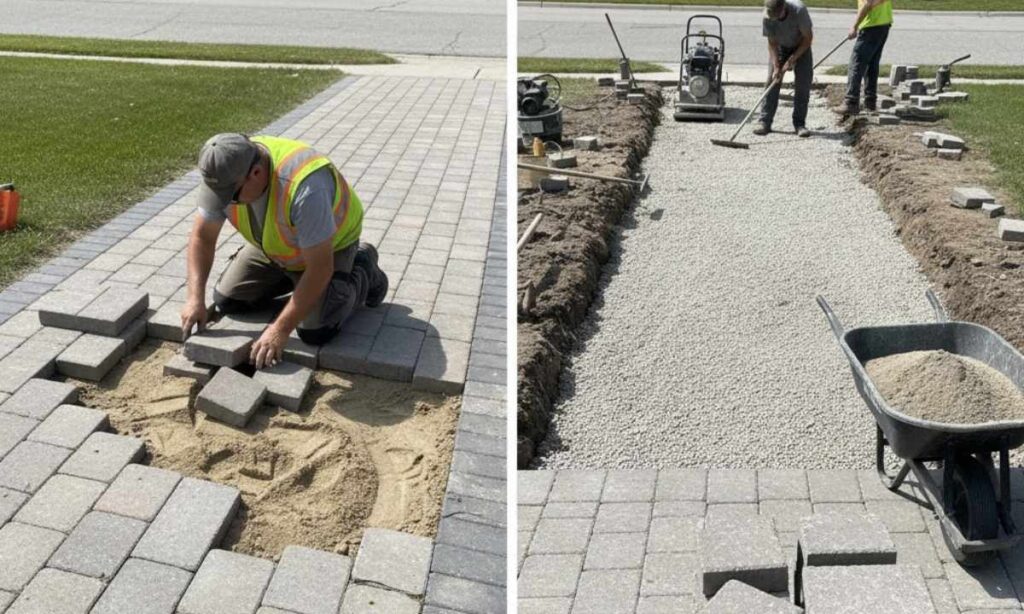
When Replacement Saves Money Long-Term
Yes, replacement is often cheaper over time when failures repeat or follow weather patterns.
If the walkway keeps sinking after rain, lifting in winter, or cracking in the same locations, the base and subgrade are no longer stable. At that point, surface repairs don’t fix the cause. They only reset the appearance until the next cycle of clay movement or water saturation.
Water-driven movement is the biggest tipping point. Once runoff, poor drainage, or trapped moisture reaches the base, every wet season weakens it further. Every winter freeze expands the damage. In those cases, replacement isn’t about upgrading materials. It’s about rebuilding the system so the same costs don’t keep coming back.
In St. Louis, the most expensive option is usually the one that looks cheaper at first but has to be repeated.
| Condition Observed | Repair Usually Makes Sense | Replacement Is Usually Smarter |
|---|---|---|
| Damage pattern | Isolated, unchanged over time | Repeated or spreading failures |
| Base condition | Stable and firm underfoot | Soft, shifting, or eroding |
| Weather impact | Little change after rain or winter | Worse after rain or freeze–thaw |
| Water exposure | No ongoing drainage issues | Active runoff or trapped moisture |
| Repair history | First-time or infrequent | Same areas repaired multiple times |
How Long Walkways Should Last in St. Louis Conditions
Walkway lifespan in St. Louis depends less on the surface material and more on how well the system underneath handles water, clay soil, and freeze–thaw cycles. When those forces are managed correctly, walkways can last decades here. When they are not, even newer installations can start failing within a few years.
This section sets realistic expectations so homeowners can judge value, not just upfront price.
Expected Lifespan by Material (Proper Installation)
Concrete walkways can last multiple decades when installed over a stable base with proper drainage, but they are sensitive to soil movement and moisture. In St. Louis, concrete often performs well structurally at first, then shows cracking or heaving once clay movement and freeze–thaw stress reach the slab. Lifespan is shortened most often when water gets trapped beneath the concrete or the base depth is inadequate for local soil conditions. Reported industry expectations commonly fall in the multi-decade range under proper installation, but failures appear much earlier when drainage or base preparation is weak.
Paver walkways typically last longer than rigid surfaces in St. Louis because they can accommodate minor ground movement. Individual pavers sit on a compacted base and joint system that allows limited adjustment as clay expands or contracts. When properly installed, paver systems are often cited as long-term solutions with service lives extending several decades, especially because localized settlement can be corrected without replacing the entire walkway. Their longevity still depends on base depth, compaction, and edge restraint.
Gravel walkways have the shortest functional lifespan and require ongoing maintenance. While gravel itself does not crack, it migrates, washes out, and settles into clay soil over time. In St. Louis conditions, gravel paths often need periodic regrading, replenishment, and edge control to remain usable. Gravel can function for many years, but its performance depends on maintenance rather than structural longevity.
What Shortens Walkway Lifespan the Most in STL
Water exposure is the single biggest factor that reduces walkway lifespan in St. Louis. When water pools on the surface or saturates the base, it weakens support layers and accelerates erosion. Repeated wetting also amplifies freeze–thaw damage during winter.
Clay soil movement creates ongoing stress that rigid systems cannot absorb. Expansive clay swells when wet and shrinks during dry periods. That movement transfers directly into cracking, settling, or joint separation when the base is not designed to isolate the walkway from soil shifts.
Freeze–thaw cycles magnify small installation mistakes over time. Trapped moisture expands when frozen, lifting or fracturing walkways. Once those movements start, each winter compounds the damage, shortening lifespan even if the surface material itself is durable.
The practical takeaway is simple. In St. Louis, walkway lifespan is earned through system design, not promised by material choice. When water is controlled, the base is engineered for clay soil, and freeze–thaw exposure is anticipated, walkways reach their expected service life instead of falling short.
How to Tell If a Walkway Quote Is Reasonable in St. Louis
Most homeowners don’t struggle with getting quotes. They struggle with understanding why the numbers are different. Two walkway bids can look similar on the surface but be based on very different assumptions about soil behavior, drainage, and long-term performance. In St. Louis, price alone tells you very little. Quote structure is what determines whether a cost is reasonable or risky.
This section explains what a legitimate walkway quote should clearly spell out, and which omissions usually signal shortcuts that lead to early failure.
What Legitimate Quotes Always Include
A reasonable walkway quote in St. Louis explains how the system is being built, not just what it will look like when finished. The details below show whether the contractor is accounting for local soil and water conditions or pricing the job as a surface-only install.
-
Base depth details
A legitimate quote specifies that a constructed base exists and describes it in measurable terms. This usually means the base is identified as a separate structural layer rather than implied as “leveled ground.” When base depth is defined instead of assumed, the walkway is less dependent on seasonal soil movement. -
Drainage scope
Every valid quote acknowledges how water will move around the walkway once it is installed. That may involve redirecting surface flow, extending discharge points, or shaping grades so water does not collect at the base. The key is that water movement is addressed intentionally, not ignored. -
Material specifications
The quote identifies the surface material and how it will be installed within the system. This includes thickness, joint treatment, or reinforcement where applicable. Clear material specs reduce ambiguity and make it easier to compare bids on equal footing.
When these elements are present, pricing differences usually reflect real site conditions rather than guesswork.
Red Flags That Signal Underpricing or Shortcuts
Lower prices often come from omitted work rather than efficiency. In St. Louis, those omissions tend to show up in the same repeat patterns.
-
Vague prep descriptions
Phrases like “standard prep” or “basic base” without explanation usually mean the subgrade and base are being treated as the same thing. This is one of the most common reasons walkways settle or crack after the first few wet seasons. -
No drainage plan
If drainage is not mentioned at all, it is being left to chance. Water does not ignore walkways in this region, and quotes that do often lead to sinking, washouts, or winter heaving that require correction later. -
Flat pricing without site review
Quotes given without seeing slope, access, or runoff conditions rely on assumptions that rarely hold up. When site conditions are not evaluated, the risk is transferred to the homeowner through future repairs.
A reasonable quote does not promise the lowest number. It shows that the contractor understands how soil, water, and structure interact on your specific property.